Borehole Excavation Clearance

Before a borehole can go in, someone needs to be confident nothing’s in the way. Boreholes are typically drilled to a specific depth and location for a reason, whether that’s ground investigation, piling, monitoring wells or geotechnical testing, which means there’s usually little flexibility to simply move the position if a buried service turns out to be in the way. Confirming the ground is clear before drilling starts avoids the borehole having to be relocated, redesigned, or abandoned partway through.

Why Borehole Positions Carry Extra Risk

Unlike a general excavation, a borehole is a fixed, narrow point of intrusion, often drilled to significant depth. This means there’s less margin to work around an unexpected utility than there would be with a wider excavation, where a service could sometimes be avoided by shifting the dig slightly. If a borehole position can’t be moved for engineering reasons, and there’s a live service beneath it, the drilling contractor needs to know before the rig arrives on site, not after.

How We Clear a Borehole Position

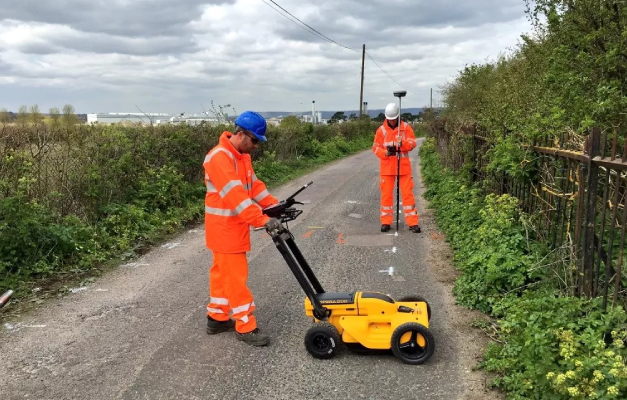
Our surveyors use a combination of electromagnetic detection and GPR to check each proposed borehole location, adjusting the method to suit ground conditions and the type of services likely to be present. Electromagnetic detection traces live cables and metallic pipes, while GPR picks up non-metallic services and other subsurface features that electromagnetic methods alone would miss, similar to the non-intrusive approach used in our Virtual Trial Holes service. Where a site has multiple borehole positions, we clear each one individually rather than assuming uniform ground conditions across the whole site.

What You Get Before Drilling Starts

You’ll receive clearance confirmation for each borehole position, along with details of anything identified nearby that the drilling contractor needs to be aware of. This gives your geotechnical or drilling team the confidence to proceed with each position as planned, or the information needed to adjust a specific location if something is found where the borehole was due to go.

Subvision Surveys is SSIP and ISO accredited, and our team clears borehole positions for geotechnical contractors, drilling companies and site investigation teams across the UK, often as part of a wider ground investigation programme alongside our GPR services.

Get in touch to discuss borehole clearance for your project, or call 0333 920 9427.
Get Your Free Quote

Click or drag a file to this area to upload.

Popular surveys trusted by industry professionals.

Popular surveys trusted by industry professionals.

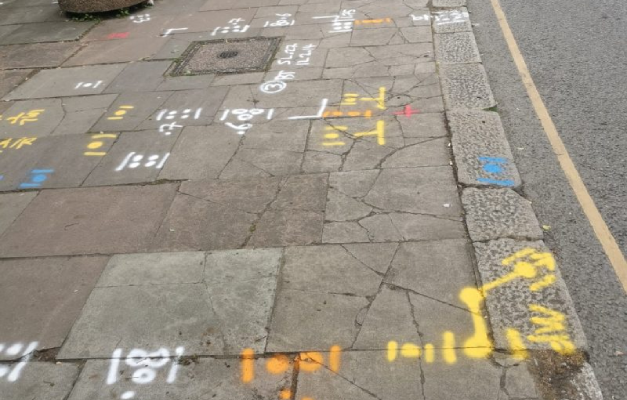
Underground utility markings sprayed on a pavement after a PAS 128 survey

PAS128 Surveys

PAS128 surveys provide accurate underground utility mapping to reduce risk and delays.

Subvision surveyors carrying out a GPR survey with a ground penetrating radar cart

GPR Surveys

GPR surveys identify hidden underground features to support safer site development works.

Surveyor using a total station for a topographical survey of a heritage building

Topographical Surveys

Topographical surveys provide accurate land and site data to support planning and design.

Surveyor ferro scanning a concrete floor slab over a reference grid

Ferro Scanning

Ferro scanning and GPR rebar mapping surveys locate hidden steel and concrete details.

CCTV drain survey camera inspecting the inside of a drainage pipe

CCTV Surveys

CCTV drainage surveys and jetting identify blockages and assess pipe conditions fast.

Utility search pack drawing showing buried service routes on a site plan

Utility Search Packs / PAS128 Type D

Desktop utility search packs provide essential PAS128 Type D underground asset data.

BOREHOLE EXCAVATION AND CLEARANCE FAQs

At Subvision Surveys, we provide professional borehole excavation and clearance services for domestic and commercial clients across Essex and the wider UK. Our experienced team uses electromagnetic and GPR detection to safely clear borehole locations before drilling begins, checking each position individually rather than assuming uniform ground conditions across a site. We’re SSIP and ISO accredited, and understand that every site is different, which is why we take a careful, considered approach to ensure our work is completed efficiently, safely and to the standard geotechnical and drilling contractors rely on.

Borehole excavation and clearance involves confirming a proposed borehole position is free of buried services or obstructions before drilling begins. Because boreholes are typically drilled to a fixed depth and location for a specific reason, such as ground investigation, piling or geotechnical testing, there’s often little flexibility to simply move the position if something unexpected is found. Our clearance process checks each location in advance, helping clients avoid a borehole having to be relocated, redesigned or abandoned partway through due to an unforeseen obstruction discovered during drilling.

We support a wide range of clients, including developers, engineers, construction companies, environmental specialists, geotechnical contractors and property owners. Our services are suitable for both smaller domestic projects and larger commercial developments where accurate ground information is required before drilling can proceed. We work closely with each client to understand the purpose of the borehole works, whether that’s site investigation, environmental testing or construction-related drilling, so our clearance approach matches the specific requirements of their project.

Our team begins by understanding the site conditions and the purpose of the borehole works, before using electromagnetic detection and GPR to check each proposed position. Electromagnetic detection traces live cables and metallic pipes, while GPR identifies non-metallic services and other subsurface features that electromagnetic detection alone would miss. Combining both methods gives a more complete picture of what’s present at each borehole location, allowing us to confirm clearance, or flag anything that needs addressing, before the drilling contractor arrives on site.

Having a borehole position properly cleared before drilling begins helps reduce risk and avoid costly complications once works are underway. Because a borehole is a fixed, narrow point of intrusion, often drilled to significant depth, there’s usually less flexibility to work around an unexpected service than with a wider excavation. If a live cable or pipe is struck during drilling, it can cause safety incidents, service disruption and project delays. Clearing the position in advance ensures drilling can proceed as planned, without unexpected obstructions bringing work to a halt.

Our borehole excavation and clearance services support a variety of projects, including construction developments, geotechnical site investigations, environmental testing and engineering works. We work with professionals who need reliable ground information before making important decisions about drilling positions and site suitability. Whether supporting a single borehole on a small site or a multi-position investigation programme on a larger development, our team provides the same level of care and accuracy, checking each location individually rather than treating clearance as a single blanket assessment.

When you work with Subvision Surveys, you can expect a knowledgeable team that understands the importance of delivering safe, accurate and reliable clearance results before drilling begins. We’re SSIP and ISO accredited, and pride ourselves on attention to detail and the ability to adapt our approach to suit each site and project type. From your initial enquiry through to clearance confirmation, our aim is to give geotechnical and drilling teams the confidence to proceed with each borehole position exactly as planned.

Have Any Questions?

If you have any questions regarding our services feel free to contact the Subvision team.

Subvision Surveys accreditations: QUVA ISO certification, Achilles UVDB, SafeContractor, Constructionline, Builder's Profile, European GPR Association, Avetta, SMAS, CHAS, Essex Chambers of Commerce and The Survey Association