
Understanding What PAS128 Covers
PAS128 is a publicly available specification that defines how underground utility surveys should be planned, undertaken, and reported. It sets out minimum requirements for equipment, methodology, competence, and data presentation. It also requires surveyors to categorise findings by confidence level, which removes the assumption that all detected services are located with the same degree of certainty.
This distinction is critical. Older survey outputs often presented utility locations as definitive, even when based on limited evidence. PAS128 replaces this approach with one that is evidence-led and transparent, allowing designers and contractors to make informed decisions based on known levels of risk.
Factors That Influence Survey Accuracy
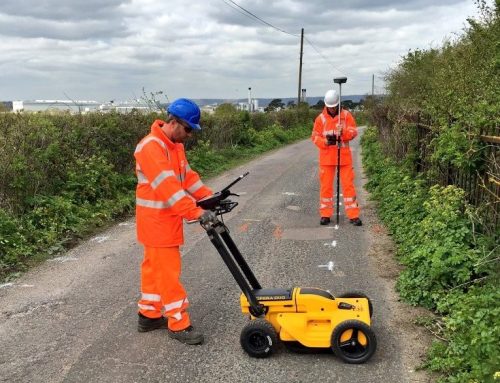
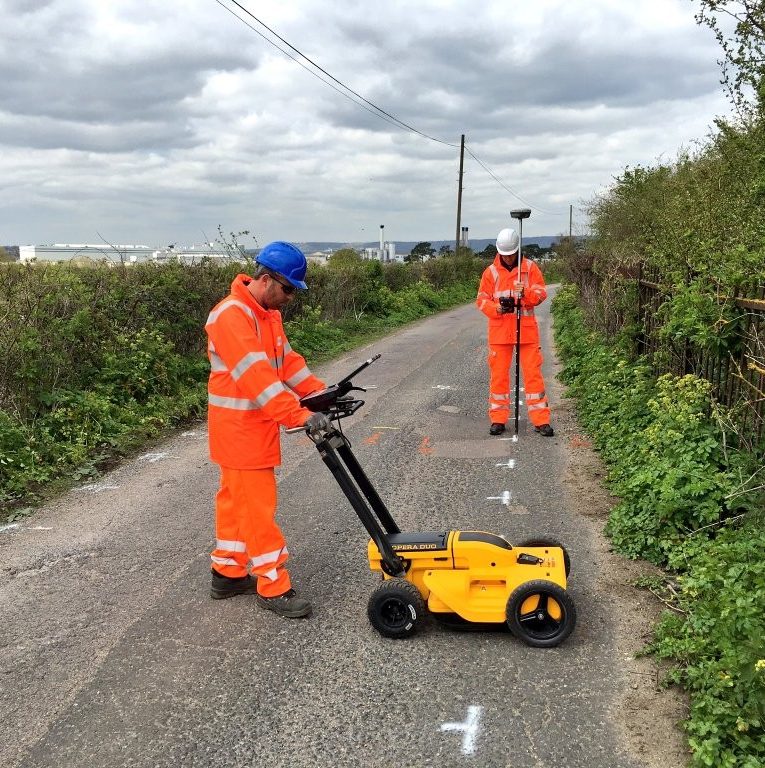
The accuracy of a PAS128 survey is heavily dependent on the methods employed and the conditions on site. High quality surveys rely on a combination of electromagnetic location techniques and ground penetrating radar, supported by existing records and visual inspection where available. Each method has strengths and limitations, and using them together allows surveyors to validate results rather than relying on a single data source.
Ground conditions also play a significant role. Soil type, moisture content, surface finishes, and site congestion can all affect detectability and depth estimation. Services constructed from non-conductive materials, or those installed at unusual depths, present additional challenges. A competent PAS128 survey accounts for these variables and reflects them in both the survey approach and the final reporting.
Accuracy in Practical Terms
In suitable conditions, most metallic and traceable utilities can typically be located to within a few hundred millimetres horizontally. Depth estimation is often achievable but should always be treated with more caution, as it is more sensitive to interference and environmental factors. PAS128 requires these limitations to be clearly stated rather than implied accuracy being assumed.
Crucially, PAS128 survey outputs include confidence classifications for each utility feature identified. This allows users of the data to distinguish between services that have been positively detected and those that are inferred from indirect evidence. This level of detail is often far more valuable than a drawing that appears precise but offers no insight into reliability.
Can PAS128 Surveys Eliminate All Risk?
No underground survey can completely remove the risk of unknown services. Legacy infrastructure, abandoned utilities, undocumented private connections, and historic alterations can all exist beyond the scope of detection equipment. These risks are particularly prevalent on older or heavily developed sites.
The value of PAS128 lies in how these uncertainties are managed. Rather than presenting a simplified view of the subsurface, PAS128 surveys highlight where confidence is high and where additional caution is required. This supports safer excavation practices and more effective risk management on site.
Why Accuracy Matters Beyond Detection
Accurate and well-reported utility data has implications beyond avoiding service strikes. It informs design development, sequencing of works, cost planning, and health and safety compliance. PAS128 surveys are increasingly referenced within CDM processes as evidence of due diligence when identifying and managing underground risk.
For contractors and developers, this accuracy and transparency can also reduce disputes and delays by ensuring all parties are working from the same, clearly defined information set.
PAS128 Surveys by Subvision Surveys
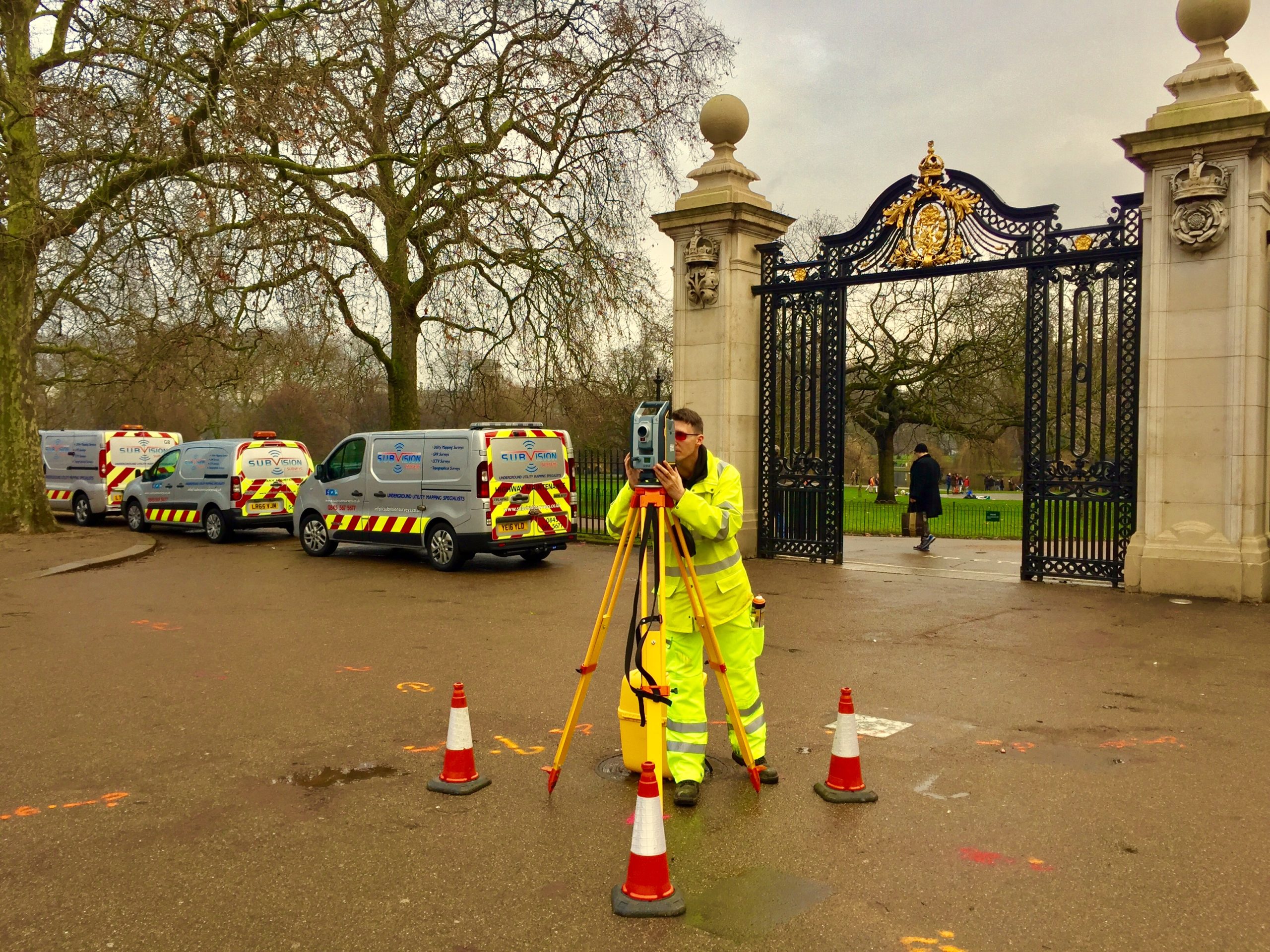
At Subvision Surveys, PAS128 surveys are undertaken with a focus on technical accuracy, appropriate methodology, and clear communication. Surveyors select techniques based on site conditions rather than defaulting to a single approach, and all findings are reviewed with practical use in mind. Reports are produced to clearly convey what has been detected, how it was identified, and where limitations remain. This ensures clients are not only provided with data, but with an understanding of how confidently that data can be relied upon.
For projects where safety, efficiency, and informed decision-making are essential, a properly executed PAS128 survey remains an invaluable part of the site investigation process.