
Sub-surface Voiding
Voiding can occur for various reasons, including natural settlement, erosion and construction issues. Natural voiding might be caused by the settlement of the ground, washout due to leaking water pipes, or the formation of sinkholes. Man-made voids might include basements, culverts, underground tanks, tunnels, pipes and chimney flues. Detecting these voids early is crucial to maintaining the structural integrity of concrete structures.
Voiding in the sub-surface can cause failures of the overlying strata, especially under abnormally heavy loads. A void’s collapse beneath a carriageway can lead to structural damage and accidents. Voids beneath warehouse slabs or loading bays can cause slab deterioration and potential failure, particularly if subjected to heavy traffic by forklifts or lorries. Detecting and locating voids early enables repairs before structural problems arise, improving safety and reducing cost.
Void Detection Using GPR
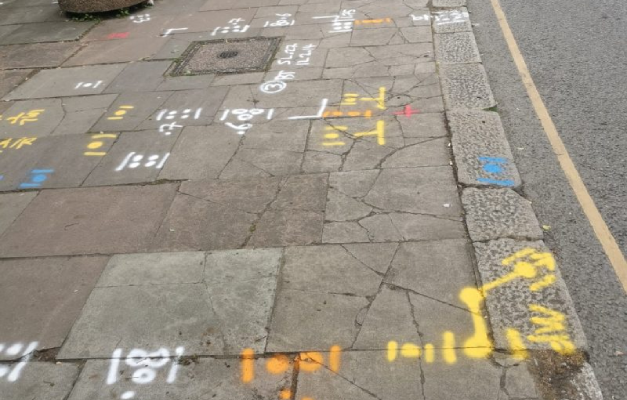
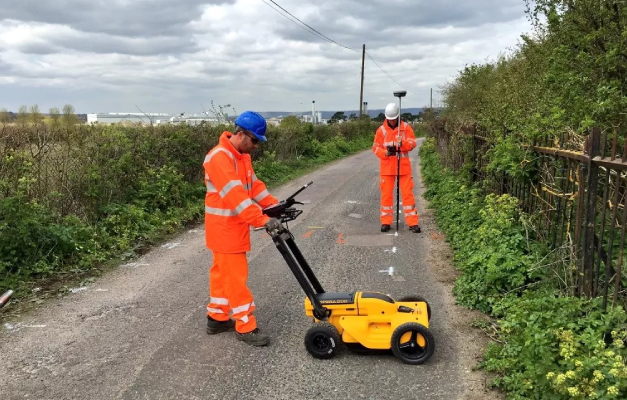
Ground Penetrating Radar (GPR) allows for the detection of potential hazards within concrete structures and the ground beneath them. Our surveyors scan the site on a regular orthogonal grid, identifying and plotting the extent of voids and other subsurface anomalies to provide a comprehensive assessment of the ground or concrete’s condition. Shallow voids can be detected effectively, and the survey is non-intrusive, cost-effective and capable of covering large areas quickly.
GPR equipment can be fitted with antennas of different central frequencies. Higher frequencies offer better resolution, while lower frequencies provide greater penetration depth at the cost of resolution. This trade-off means deeper voids generally need to be larger to be detected, since smaller anomalies at depth can fall below what a lower-frequency antenna can resolve. Because GPR detects changes within the subsurface, it can identify both open and infilled voids, as long as the infill material’s properties differ significantly from the surrounding material.
Detection of Voids Within Concrete Structures
Voids within concrete can lead to structural weaknesses and potential failures. Early detection through GPR surveys enables timely repairs, minimising risk and cost. Voids under concrete slabs can eventually cause cracking and potential slab failure, making early detection essential. Settlement due to poorly compacted fill, erosion, burrowing rodents, decaying organic material, and even moisture loss from tree roots can all create voids beneath a slab.
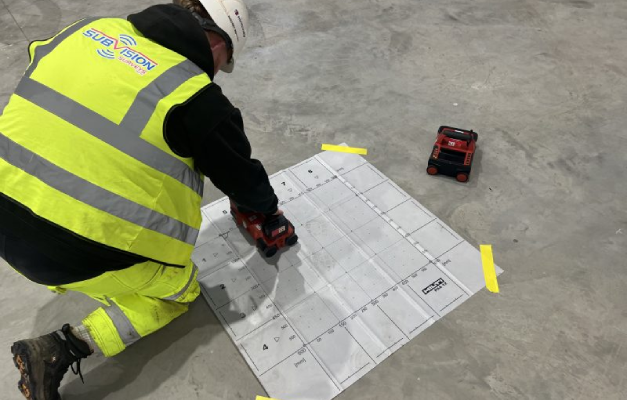
By scanning the concrete slab on a regular grid, our team can detect voids below the slab and determine their extent, allowing appropriate remedial measures to be planned with confidence rather than guesswork.
Detection of Voids in Stone Walls
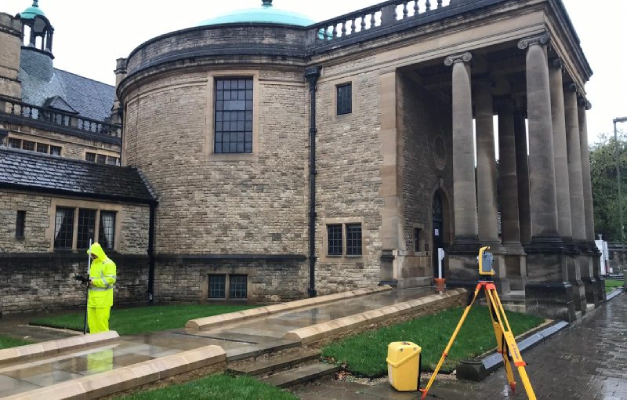
Stone walls, especially in older structures like churches, can develop voids within their rubble core infill over time. Traditional detection methods involve drilling into the wall and feeling for voids by hand, a slow and inconsistent process. GPR offers a faster, more reliable alternative. By scanning on a regular orthogonal grid, we can survey large wall areas quickly, providing a detailed picture of voiding that can be used to plan effective remedial action, such as grout injection to fill any voids identified.
Survey Deliverables
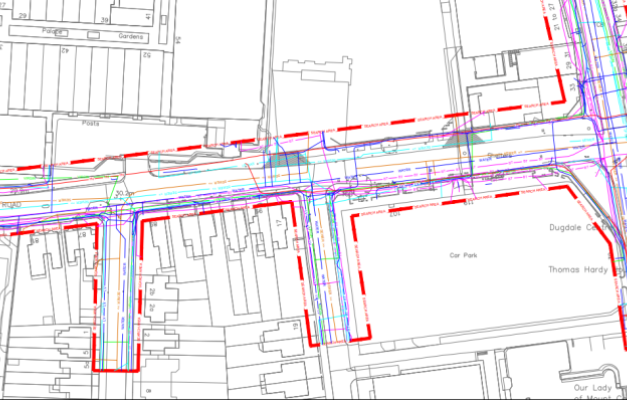
Results from our GPR surveys are typically presented in detailed reports and CAD drawings, showing the location and extent of any voids or hazards identified within concrete structures or the surrounding ground. Where a survey also covers embedded services, such as our Locating Services in Concrete Slabs work, these are mapped alongside any voids or hazards identified, giving a single, combined set of results rather than separate reports to cross-reference. This documentation supports planning and delivery of necessary repairs, helping to ensure structural safety and longevity.
Why Choose Subvision for Sub-Surface Voiding Surveys?
Subvision Surveys is SSIP and ISO accredited, with a team of over 25 surveying professionals delivering GPR void detection surveys for contractors, developers, engineers and building owners across London, the South East and nationwide. Whether you’re investigating a suspected void beneath a carriageway, warehouse slab or historic wall, our team combines the right equipment with the experience to interpret results accurately.
Contact Subvision Surveys today to discuss your sub-surface voiding survey requirements, or speak to one of our experts on 0333 920 942.
Sub-surface Voiding FAQ’S
