
Cables in a Wall Surveys
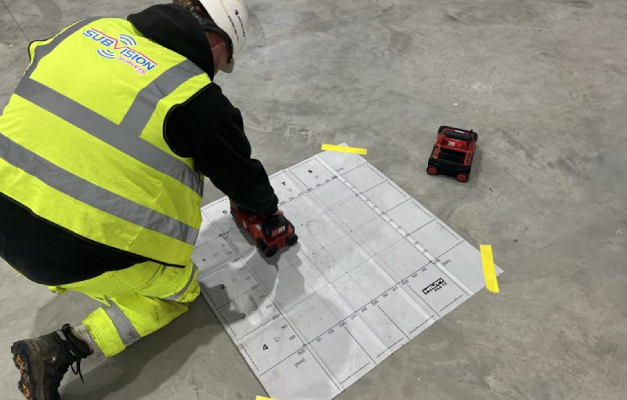
Before you drill into a wall, whether to hang a shelf, fit a kitchen, run new wiring or knock through for an extension, you need to know what’s already there. A cables in a wall survey uses Ground Penetrating Radar to locate electrical and data cables embedded within a wall, helping to prevent accidental strikes during drilling, cutting or anchoring work.
Stud Walls vs Solid Masonry
Walls present a different challenge to floors or ground surveys. Cable runs in walls are often shallow, closely spaced, and can be hidden behind plasterboard, render or masonry of varying thickness, all of which affect how clearly GPR can resolve what’s underneath. On stud walls, cables typically run through or alongside timber or metal framework, while solid masonry walls may have cabling chased directly into brick or block. Our surveyors adjust their approach depending on wall construction, rather than treating every wall survey the same way.
From Kitchen Fit-Outs to Knocking Through
This survey is commonly requested ahead of fitting kitchens, bathrooms or built-in furniture, before structural alterations such as knocking through a wall, or as part of larger renovation and refurbishment projects where multiple walls need checking before work begins, often alongside cable detection in Essex properties where external groundworks are also planned. Striking a live cable during this kind of work can cause anything from a tripped circuit to a serious electric shock risk, as well as unplanned repair costs and delays to the project.
Peace of Mind Before You Drill
Subvision Surveys is SSIP and ISO accredited, and our surveyors are experienced in tracing concealed cables within walls to a high degree of accuracy, giving homeowners, contractors and project managers the confidence to drill, cut or fix into a wall without unforeseen setbacks.
Contact Subvision Surveys today to discuss your cables in a wall survey requirements, or speak to one of our experts on 0333 920 942.
CABLES IN WALL SURVEYS FAQs
