Locating Post-Tensioned Tendons in Concrete
Identifying the precise location of post-tensioned tendons within concrete is essential for the structural integrity and safety of construction and renovation projects. These tendons carry significant load and are critical to a structure’s strength, and any inadvertent damage during drilling, cutting or coring can compromise both structural performance and safety.
Why Tendon Detection Requires a Non-Destructive Approach
Post-tensioned tendons sit within ducts inside the concrete, often under significant tension, meaning any accidental strike carries real risk, both to the structure and to anyone working nearby. Traditional exploratory methods, such as drilling to physically locate a tendon, aren’t a realistic option given this risk, which is why non-destructive detection is essential rather than optional for this type of survey.
How We Locate Post-Tensioned Tendons
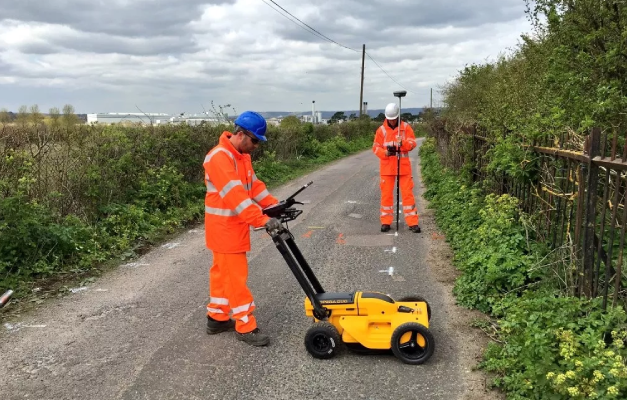
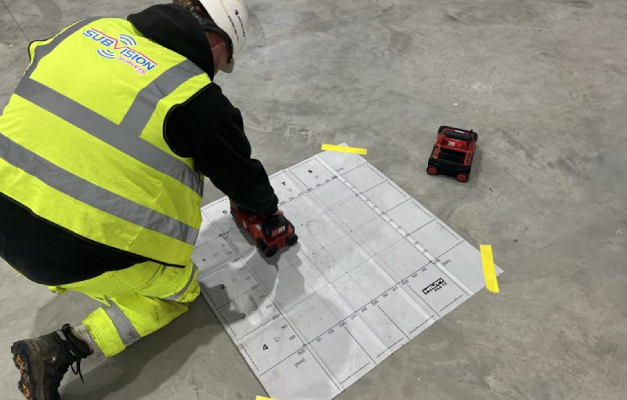
Our surveyors use Ground Penetrating Radar to scan the concrete on a regular grid, recording variations in the radar signal as it passes through the structure. Tendons and their surrounding ducting produce a distinct signal response compared to the surrounding concrete, allowing us to map their position and approximate depth without any drilling, cutting or coring. This gives your team a clear, accurate reference for exactly where it’s safe to work, and where tendons need to be avoided or accounted for in the project design.
Other Embedded Elements We Can Identify
Post-tensioned tendons aren’t the only embedded feature a structure might contain. On residential and commercial floors, we’re also regularly asked to carry out Locating Underfloor Heating Pipes, using the same non-destructive GPR approach to map pipe runs before drilling or fixing into a floor. Whatever the embedded element, tendons, heating pipes, or reinforcement, our approach stays consistent: accurate, non-invasive detection, with results you can act on directly.
What You Receive
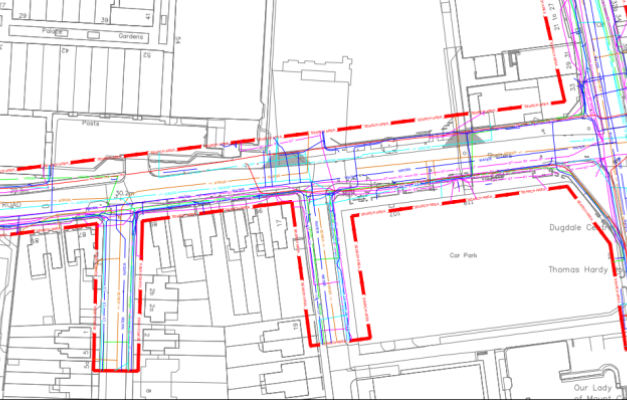
Following a survey, Subvision Surveys provides detailed reports and CAD drawings showing the location and approximate depth of identified post-tensioned tendons within the concrete structure. This gives your project team a clear, reliable reference for planning cutting, drilling or coring work around, rather than working from assumptions or original design drawings that may not reflect what’s actually in the structure today.
Choose Subvision for Post-Tensioned Tendon Detection
Subvision Surveys is SSIP and ISO accredited, with a team of over 25 surveying professionals delivering GPR surveys for contractors, engineers and building owners across London, the South East and nationwide.
Contact Subvision Surveys today to discuss locating post-tensioned tendons for your project, or speak to one of our experts on 0333 920 942.